
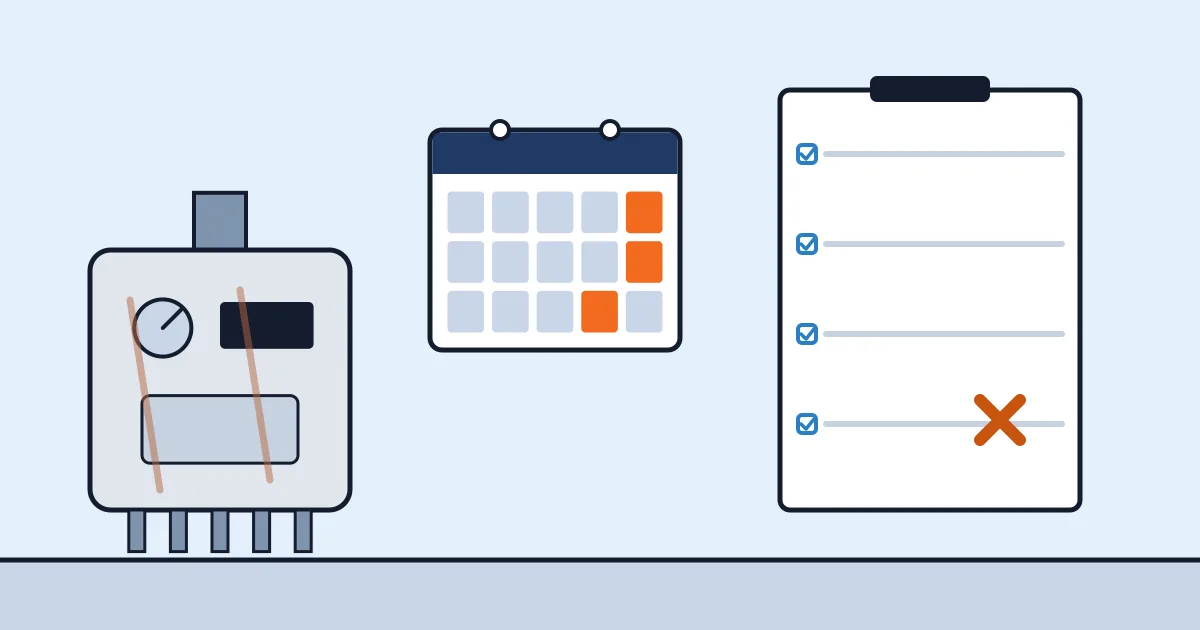
Most boilers don't stop dead. They get a little worse each year, and the signs are easy to explain away. This checklist goes through the clearest ones. Two or three together is usually a strong hint that replacing the boiler will cost you less than keeping it going.
The checklist
- It's old. Many boilers last around 10 to 15 years, and one that's older can still run but is harder to fix. Check the date on the boiler or its paperwork.
- Repair bills keep coming. A second or third call-out in a short time suggests parts are wearing out together.
- Parts are hard to find. Older models can take longer to repair because some parts are no longer made.
- Your gas bills are creeping up, though your habits haven't changed. An older, non-condensing boiler wastes more of the heat it makes.
- It's noisy. Banging, whistling or kettling can point to scale or a failing component.
- The heating is uneven or slow, or the hot water runs out sooner than it used to.
- The flame is a lazy yellow rather than blue, or there are black marks around the boiler. Stop using it and call a Gas Safe engineer straight away.
- An engineer has told you it isn't worth repairing. Ask for that in writing, with the reason.
How to weigh it up
Age alone isn't a reason to replace. A well-serviced 12-year-old boiler can be fine, while a neglected 7-year-old one may not be. What matters is the pattern: how often it fails, what the repairs cost and how well it still heats the house. Our repair cost guide shows typical bills for common faults, and a regular gas boiler service is the best way to get a straight opinion on its condition.
If you've been told a part will cost more than a third of a new boiler, that's a good moment to get a replacement quote alongside it. Our new gas boiler cost guide explains what a typical swap costs, and gas boiler replacement covers the job itself. A full guide on repairing versus replacing is planned.
A yellow or orange flame, soot, a smell of gas or a carbon monoxide alarm sounding are not signs to monitor. Turn the boiler off, open windows, and call a Gas Safe registered engineer or the gas emergency line.
Faults like a locked-out boiler or a fault code are usually worth diagnosing before deciding anything. A gas boiler repairs visit can tell you whether the problem is a quick fix or the start of a pattern.
How to judge whether your boiler needs replacing
- Find the boiler's age
Check the installation date or the date on the paperwork. Many boilers last around 10 to 15 years.
- List recent repairs
Note how many call-outs you've had in the last two years and what each cost.
- Check for safety signs
A yellow flame, soot marks or a gas smell means turn the boiler off and call a Gas Safe engineer.
- Ask for an engineer's view
At the next service, ask whether the boiler is worth keeping and request any advice in writing.
- Get a replacement quote
Compare the quote with the cost of the repair you've been given before deciding.
Frequently asked questions
How long does a gas boiler last?
Many last around 10 to 15 years, though servicing, water quality and how hard it works all affect it.
Is it worth repairing a 10-year-old boiler?
Sometimes. If the fault is small and the boiler is otherwise reliable, yes. Several repairs in a short time suggest a replacement may be cheaper over the long run.
Will a new boiler lower my gas bill?
A modern condensing boiler is generally more efficient than an old non-condensing one, but the saving depends on your house, controls and how you use the heating.
Ready to talk to a gas boiler replacement specialist?
Get Free Quotes →